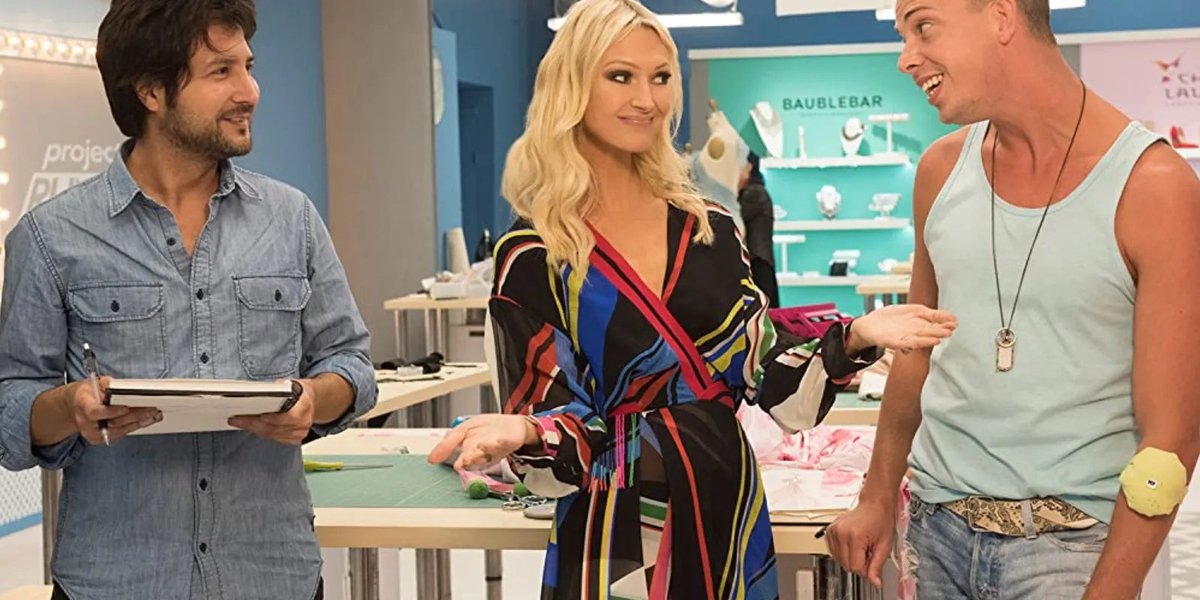
It's hard to believe it’s been nearly two decades since we first heard those now-iconic words: "Make it work." In December 2004, a quiet revolution in reality television began, ushering in a show that would redefine fashion and competitive reality forever. This wasn't just another competition; it was a masterclass in creativity under pressure, judged by industry titans, and mentored by a voice of reason. Today, we're taking a deep dive into the foundational season that started it all, offering a definitive Project Runway Season 1 Overview & Format that details the original structure and the journey of its inaugural designers.
From its humble premiere on Bravo, Project Runways first season wasn't just a hit; it was a cultural phenomenon in the making. It captivated audiences with its blend of high fashion, real-world stakes, and compelling human drama, establishing a blueprint that would inspire countless imitations and endure for years to come.
At a Glance: Project Runway Season 1 Essentials
- Premiere Date: December 1, 2004
- Network: Bravo
- Number of Designers: 12 aspiring fashion talents
- Host: Supermodel Heidi Klum, who became synonymous with the show's effortless glamour.
- Judges: Renowned designer Michael Kors, fashion director Nina Garcia, and a rotating guest judge bringing diverse industry perspectives.
- Mentor: The legendary Tim Gunn, then Fashion Chair at Parsons The New School for Design, whose empathetic guidance became a show highlight.
- Format: Weekly design challenges, often with tight deadlines and limited budgets, culminating in a runway show and elimination.
- Critical Acclaim: Received an Emmy nomination for Outstanding Competitive Reality Series.
- Legacy: Launched a global franchise and cemented its place as a cornerstone of reality television.
The Blueprint of a Phenomenon: Project Runway Season 1 Overview & Format
Before it became a global sensation, Project Runway was an ambitious concept: take a dozen aspiring fashion designers, give them impossible tasks, and see who could truly innovate under pressure. Season 1 laid down the essential framework, a format so compelling it has largely remained unchanged over countless iterations.
The Genesis: How it All Began
Project Runway burst onto screens on December 1, 2004, with 12 hopeful designers ready to prove their mettle. The premise was simple yet ingenious: a weekly competition where designers faced unique challenges, tasked with creating wearable, innovative fashion that could impress a panel of discerning judges. What made it immediately stand out was its access to the rarified world of high fashion, offering a glimpse behind the curtain of an industry often perceived as impenetrable. The show became a "sleeper hit," slowly building buzz and critical acclaim, eventually earning an Emmy nomination that underscored its quality and impact.
The Pantheon of Judgment: Judges and Mentor
Central to the show's gravitas and appeal was its impeccable casting for the judging panel and mentorship role.
- Heidi Klum (Host): The German supermodel wasn't just a pretty face; Klum exuded warmth, wit, and a no-nonsense attitude that kept the designers and judges in line. Her ability to deliver critiques with both empathy and blunt honesty made her an ideal host, grounding the high-stakes environment.
- Michael Kors (Judge): The acclaimed American designer brought a sharp, often cutting, but always insightful perspective. Known for his pithy one-liners and keen eye for commercial appeal, Kors became an instant fan favorite, offering critiques that were as entertaining as they were accurate.
- Nina Garcia (Judge): As the then-Fashion Director for Elle magazine (and later Marie Claire), Garcia was the arbiter of editorial taste. Her critiques were measured, sophisticated, and focused on construction, modernity, and whether a piece truly deserved to be on the pages of a high-fashion magazine.
- Tim Gunn (Mentor): Perhaps the most beloved figure to emerge from the show, Tim Gunn's unique role as mentor was revolutionary. As the Fashion Chair at Parsons The New School for Design, he provided invaluable guidance, gentle critiques, and emotional support to the often-stressed designers. His catchphrase, "Make it work," became a cultural touchstone, embodying the spirit of resourceful creativity. His compassionate yet firm counsel was a crucial ingredient in the show's success, making him the empathetic anchor in a high-pressure environment.
The Core Challenge Format: Fashion Under Fire
Each episode of Project Runway Season 1 typically followed a consistent format:
- The Challenge Reveal: Heidi Klum or a guest figure would introduce the week's design challenge, often accompanied by a specific theme, material restriction, budget, and time limit.
- Fabric Shopping: Most challenges involved a trip to Mood Designer Fabrics in New York City (though sometimes budgets were $0, requiring creative repurposing).
- Design and Construction: Designers would sketch, pattern, cut, and sew their garments in the studio, often with confessionals revealing their struggles and triumphs.
- Tim Gunn's Critiques: Tim would visit the workroom, offering his sagely advice and helping designers navigate their creative roadblocks.
- Runway Show: Models would showcase the finished garments on the runway to the judges.
- Critique and Deliberation: The judges would provide feedback, often highlighting both successes and failures in painstaking detail.
- Winner and Loser: A winner would be chosen, often receiving a prize (like immunity in the next challenge or a feature in a magazine), and one designer would be "out" — eliminated from the competition with Heidi's famous line, "Auf Wiedersehen."
This predictable yet always exciting structure quickly drew viewers in, allowing them to understand the stakes and become invested in the inaugural cast of designers' journeys.
A Week-by-Week Walkthrough: Unpacking Season 1's Iconic Challenges
The challenges in Project Runway Season 1 were a brilliant mix of practical application, artistic expression, and sheer absurdity, all designed to push designers to their creative limits. Here’s a detailed look at how the drama unfolded.
s01e01 / Innovation (December 2, 2004): From Supermarket to Runway
The very first challenge set the tone for the show's ingenuity. Designers were thrown into a supermarket with a mere $50 budget and one hour to scavenge materials for a glamorous night-out outfit. This seemingly impossible task immediately demonstrated the creativity and resourcefulness required to succeed on Project Runway. It was a test of imagination over expensive textiles, and the results ranged from surprisingly chic to hilariously catastrophic. Daniel was the first designer eliminated, signaling that even early missteps would be costly.
s01e02 / Vision (December 9, 2004): Capturing "Envy"
With model Mary out, the remaining designers faced a more abstract challenge: create a cotton outfit depicting "Envy." This pushed them to translate an emotion into tangible fashion, a crucial skill for any designer creating a collection. The episode also introduced a twist involving a silent auction, where the highest bidder on a model won the challenge, adding an intriguing layer of strategic play. Ultimately, Mario was eliminated, proving that concept alone wasn't enough; execution was key.
s01e03 / Commercial Appeal (December 16, 2004): Designing for the High Street
After model Allison's departure, designers were tasked with creating a holiday dress for Banana Republic. They had to choose between two themes: "my grandmother's attic" (soft pinks/yellows) or "Art Deco" (black, white, silver). The stakes were high: the winning design would be produced and sold by Banana Republic, a massive commercial opportunity. This challenge highlighted the balance between high fashion and commercial viability, a constant tension in the industry. Starr was eliminated, emphasizing the difficulty of translating runway aspirations into mass-market appeal.
s01e04 / Collaboration (January 6, 2005): Styling a Rock Star
Model Josiane was out, and the designers faced their first team challenge, collaborating on a new look for rock star Sarah Hudson, including hair and makeup. Sarah selected three concepts, and their respective designers (Kevin, Jay, Austin) led teams (Kevin/Nora/Alexandra, Jay/Kara/Rob, Austin/Wendy/Vanessa) to execute these visions with a $0 budget in just one day. This challenge tested not only individual design skills but also the ability to work under a client's specific vision and manage a team, crucial lessons for any professional designer. Vanessa was eliminated, highlighting the perils of team dynamics and failing to meet a client brief.
s01e05 (January 13, 2005): Bridal Dreams: The Wedding Dress Challenge
With model Audrey gone, designers embarked on one of the most classic and emotionally charged challenges: creating a wedding dress for their selected model. This time, they had two days and a $0 budget, forcing them to repurpose existing materials into a gown that epitomized romance and elegance. The wedding dress challenge is a cornerstone of the various challenge archetypes that would recur throughout the series. Nora was eliminated, proving that even with more time, the pressure to deliver a dream dress was immense.
s01e06 / Making a Splash (January 20, 2005): Swimwear for Splash and Style
Model Joy was out, and designers were tasked with creating a swimsuit that was both functional for swimming and sophisticated enough for a fashion party. They had a mere five hours. A clever twist involved attending an Elle magazine party, where the designer who impressed Richard Johnson (from New York Post's "Page Six" column) most would win a mention and the challenge. This unique integration of a social event with a design challenge added another layer of real-world pressure and networking opportunity. Alexandra was eliminated, showing the difficulty of balancing practicality with high-fashion allure under extreme time constraints.
s01e07 / Design a Collection (January 27, 2005): Futuristic Visions
Model Morgan was gone, and the designers faced another team challenge, this time creating a cohesive mini-collection themed "the year 2055" using items from a vintage store. Kevin led the team, which decided on a deconstructed aesthetic with a palette of tan, khaki, peach, and brown. This challenge pushed designers to think about overarching themes, material manipulation, and working as a collective vision, a true test of their ability to scale their ideas. Kevin was eliminated, demonstrating the difficulties of leadership and translating a collective vision effectively.
s01e08 / Postal Uniform Challenge (February 3, 2005): Utility Meets Style
After model Erin’s departure, designers received U.S. Postal Service uniforms. They spent a morning on a real postal route to understand the demands of the job before redesigning the letter carrier's uniform to be hip and functional, all with a $0 budget. This challenge perfectly blended practicality, client needs, and creative repurposing, requiring designers to solve real-world problems with fashion. Robert was eliminated, highlighting how difficult it is to transform utilitarian garments into something fashionable without losing functionality.
s01e09 / Design for the Red Carpet (February 10, 2005): Red Carpet Ready
With model Olga out, the stakes soared. Designers were challenged to create a red-carpet dress for Access Hollywood host Nancy O'Dell to wear at the 2005 Grammy Awards. They even received help from eliminated designer Rob and, once again, had a $0 budget. This was a direct, high-profile client brief, demanding a gown that would stand out on one of the biggest nights in entertainment. Austin was eliminated, a surprising departure for a strong designer, underscoring the brutal difficulty of meeting exacting celebrity expectations under pressure.
s01e10 / Reunion Show (February 17, 2005): Reflecting on the Journey
This episode was a welcome break from the eliminations, bringing back all the contestants for a reunion special. It offered a chance to reflect on the season's drama, friendships, rivalries, and most memorable moments, giving viewers an update on their favorite (and least favorite) personalities. It was an important bridge before the grand finale, allowing audiences to reconnect with the entire cast.
s01e11 / Fashion Week (February 24, 2005): The Grand Finale
The culmination of months of grueling work, the final three designers—Jay McCarroll, Wendy Pepper, and Kara Saun—presented their 12-piece collections at Fashion Week. This was their moment to shine, to demonstrate their cohesive vision and artistic identity on a global stage. The pressure was immense, the stakes unimaginable. After a breathtaking show of creativity and months of competition, Jay McCarroll was declared the first Project Runway winner, with Wendy Pepper and Kara Saun as formidable runners-up. His victory was a testament to his unique artistic voice and consistent performance throughout the season.
The Original Formula: What Made Season 1 a Sleeper Hit?
Project Runway Season 1 wasn't just a competition; it was a carefully crafted narrative that resonated deeply with viewers. Its success stemmed from several key factors that became the show's enduring hallmarks.
Authenticity and Raw Talent
The show tapped into the universal appeal of watching raw talent blossom under pressure. Viewers saw designers sketching furiously, struggling with challenging fabrics, and celebrating small victories. The authenticity of the creative process, with all its frustrations and triumphs, was deeply compelling. It wasn't about manufactured drama; it was about the genuine struggle to create beauty.
The Human Element: Drama and Camaraderie
Beyond the designs, the personalities of the designers themselves became central. Audiences became invested in the rivalries, the friendships, the moments of despair, and the sheer joy of creation. The close quarters of the workroom fostered both tension and unexpected bonds, creating a compelling human drama that underpinned the fashion spectacle.
Tim Gunn's Enduring Mentorship
Tim Gunn was, arguably, the show's secret weapon. His blend of fashion expertise, empathetic listening, and gentle prodding provided a much-needed counterpoint to the high-stakes judging. He wasn't just a mentor; he was a surrogate therapist and a wise elder, someone viewers could trust and root for, making the challenging journey feel more relatable.
The Stakes: Real-World Opportunity
The prizes for Project Runway were significant: a cash prize to start a line, a fashion spread in Elle magazine, and a mentorship from the Inc. company. For the designers, this wasn't just a game; it was a life-changing opportunity. This tangible reward elevated the competition, ensuring that every elimination felt earned and every victory hard-won. The opportunity for designers to truly launch their careers made the show feel more serious and impactful than many other reality programs.
Beyond the Runway: Lasting Impact and Legacy
Project Runway Season 1 didn't just crown a winner; it launched a franchise that would span decades and numerous international versions. Its critical acclaim, including that Emmy nomination for Outstanding Competitive Reality Series, cemented its place in television history. It democratized fashion, making the design process understandable and exciting for a mainstream audience. It also proved that reality television could be intelligent, educational, and genuinely inspiring, showcasing true artistry and the grit required to succeed in a demanding industry. The show's original format and cast set a remarkably high bar, creating a blueprint for reality television that prioritized genuine talent and authentic struggle over manufactured drama.
Your Guide to Reliving the Magic
If you've never experienced the genesis of this incredible series, or if you're a long-time fan yearning for a trip down memory lane, rewatching Project Runway Season 1 is an absolute must. You'll witness the birth of iconic phrases, the struggles of the iconic panel of judges to find common ground, and the sheer creative audacity of the designers who dared to dream. It’s a masterclass in how a reality show can transcend its genre, offering both pure entertainment and genuine insight into the creative process. So, cue up those episodes and get ready to be inspired by the original fashion revolution!